Downloads and Resources

Guides, booklets, and practical resources you can download, print, and share — covering healthcare, screening, and support for trans+ people and every other member of our rainbow community.

Cancer Booklet
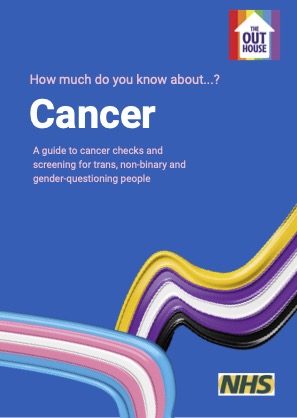
How much do you know about? Cancer Published by The OutHouse
About this resource Everyone deserves access to cancer information that feels relevant, respectful and inclusive. This booklet has been created specifically for transgender, non-binary, gender-questioning and intersex people, providing clear guidance on breast, cervical, testicular and prostate cancer awareness. It explains how to recognise symptoms, perform self-checks, understand screening appointments, and request reasonable adjustments to make healthcare more comfortable and affirming. Whether you’re looking to learn more for yourself or support someone else, this practical guide aims to empower you with the knowledge and confidence to take charge of your health.

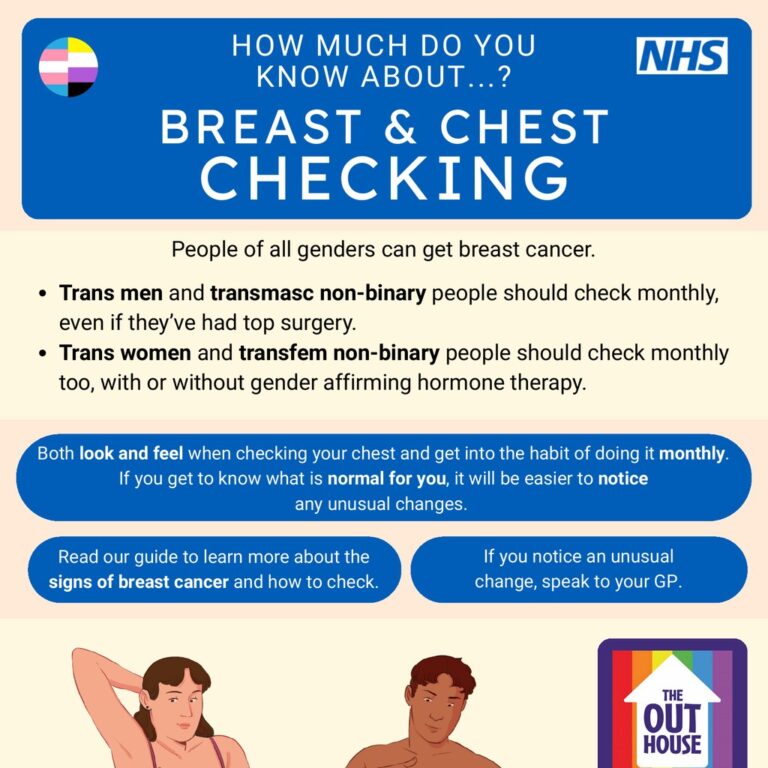
Breast & Chest Self-Checking

Breast & Chest Checking   A quick, practical guide to breast and chest self-checking for transgender and non-binary people, covering who should check, what to look for, and when to speak to a GP.
About this resource This grab sheet is part of our cancer awareness series, designed as a short, practical companion to our full booklet, focused on breast and chest self-checking for transgender and non-binary people. Who should check — Breast cancer isn’t only a risk for cisgender women. Trans men and transmasculine non-binary people should continue to self-check even after top surgery, as some breast tissue can remain. Trans women and transfeminine non-binary people taking oestrogen should also check regularly, as hormone therapy can increase breast tissue and associated risk. What to look for — Symptoms to be aware of include any change in size, shape, or feeling, or a new lump that wasn’t there before. Checking monthly makes it easier to notice changes early. When to speak to a GP — If something doesn’t feel right, don’t wait — speak to your GP. Early detection makes a real difference to outcomes, and GPs are used to supporting trans+ patients through this conversation.

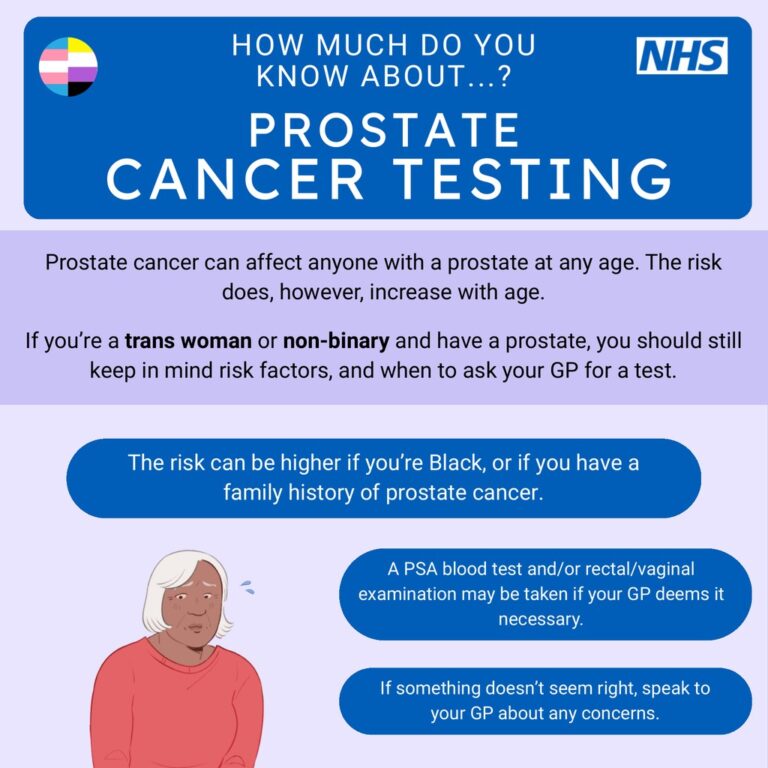
Prostate Cancer Testing

Prostate Cancer Testing   Clear, inclusive guidance on prostate cancer risk and testing for trans women, non-binary people, and anyone with a prostate.
About this resource This grab sheet is part of our cancer awareness series, focused on prostate cancer testing for anyone with a prostate, including trans women and non-binary people who are sometimes overlooked in mainstream prostate cancer messaging. Who is at risk — Prostate cancer can affect anyone with a prostate at any age, though risk increases with age. If you’re a trans woman or non-binary and have a prostate, it’s still important to keep risk factors in mind, even where hormone therapy is part of your care. Increased risk factors — Risk can be higher if you’re Black, or if you have a family history of prostate cancer, regardless of gender. Getting tested — A PSA blood test and/or a digital examination may be offered if your GP feels it’s necessary. If something doesn’t feel right, speak to your GP about any concerns rather than waiting for a routine check.

Testicular Self-Checking

Testicular Checking A practical guide to testicular checking for trans and non-binary people, covering how and when to check and what symptoms to watch for.
About this resource This grab sheet is part of our cancer awareness series, focused on testicular self-checking for anyone with testicles, including trans women and non-binary people who may assume this doesn’t apply to them. Who should check — Testicular cancer can affect people of any age but is most common between 15 and 49. Oestrogen does not affect your level of risk, so if you’re a trans woman or non-binary and have testicles, it’s important to know how to self-check. How to check — Self-check monthly, feeling for any change in size or shape of the testicles. What to look for — Symptoms can also include an unusual lump, dull aches, or lower back pain. If something doesn’t seem right, speak to your GP rather than waiting to see if it resolves on its own.

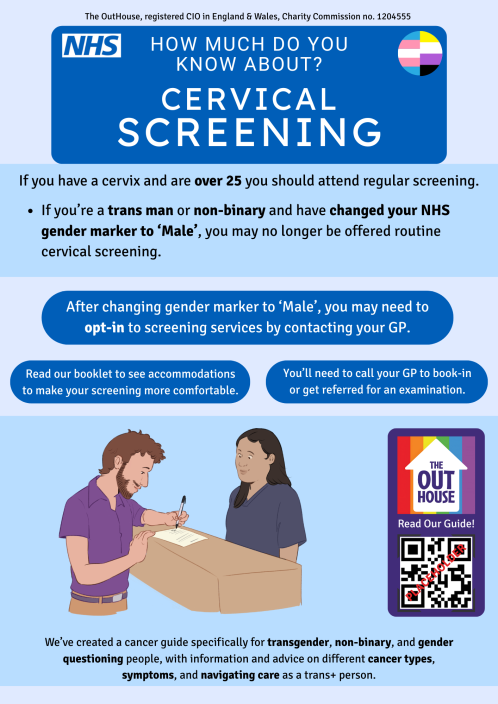
Cervical Screening

Cervical Screening Guidance on cervical screening for trans men and non-binary people, including how changing your NHS gender marker can affect screening invitations.
About this resource This grab sheet explains cervical screening for anyone with a cervix, with a particular focus on trans men and non-binary people who may fall through the gaps in routine NHS screening invitations. Who needs screening — If you have a cervix and are over 25, you should attend regular cervical screening, regardless of gender identity. Gender marker changes — If you’re a trans man or non-binary and have changed your NHS gender marker to ‘Male’, you may no longer automatically be offered routine cervical screening. Opting back in — After changing your gender marker, you may need to opt in to screening services by contacting your GP directly, and may need to call to book in or ask for a referral rather than waiting for an invitation letter. Making it more comfortable — Our full cancer awareness booklet covers accommodations you can ask for to make screening appointments more comfortable and affirming.

First Steps

First Steps: A Parent’s Guide to Supporting Your Trans+ Child A practical, accessible guide for parents and carers whose child has recently come out as transgender, non-binary, or gender questioning.
First Steps covers everything from understanding key terminology to navigating school policies, accessing professional support, and considering legal and medical options — written with warmth and co-produced with the trans+ community.

About this resource


First Steps is a free booklet produced by The OutHouse, an LGBTQ+ charity based in Colchester. It was written by Eevie Paige and co-produced with members of The OutHouse’s trans+ community.

Research shows that parental support significantly reduces the risk of mental health difficulties for trans and non-binary young people. This guide is designed to help parents feel informed and confident in providing that support.

What the booklet covers

Glossary — Plain-language explanations of key terms including transgender, non-binary, gender dysphoria, gender identity, gender expression, pronouns, neo-pronouns, deadnaming, misgendering, and sexual and romantic orientation.

Common concerns — Including the “is it just a phase?” question, with reassurance that most aspects of social transition are fully reversible, and that coming out is typically the result of a long period of reflection rather than a sudden decision.

Creating a supportive environment — Practical advice on open communication, using correct names and pronouns, and advocating for your child at school. Includes guidance on the Equality Act 2010, safeguarding duties, and what schools are required to provide following the April 2025 Supreme Court ruling — including access to private gender-neutral facilities.

Navigating social challenges — How to support your child in coming out to extended family, following the child’s lead on timing and approach, and preparing for a range of family reactions.

Accessing professional support — Signposting to The OutHouse’s own counselling and peer support services, Mermaids, and Pink Therapy (the UK’s largest independent therapy directory for gender and sexually diverse clients).

Legal and medical considerations — An overview of NHS pathways including referral to the Gender Identity Development Service, puberty blockers, and Hormone Replacement Therapy (including the current pause on new prescriptions for 16–18 year olds as of March 2026). Also covers deed polls, Gender Recognition Certificates, and how to update NHS records, passports, and driving licences.

Educational resources — Recommended further reading including the Gender Construction Kit, Trans Teen Survival Guide by Fox and Owl Fisher, Gender Euphoria edited by Laura Kate Dale, and The OutHouse’s companion booklet My Body Doesn’t Feel Like Me: Gender Dysphoria Explained.

Get the booklet

First Steps is available as a free download or printed copy from The OutHouse. 🌐 theouthouse.org.uk | ✉ info@theouthouse.org.uk | 📞 01206 871394

My body doesn't feel like me
Have you ever had a pair of shoes that didn’t fit quite right? This guide is aimed at anyone interested in learning more about what gender dysphoria is, how it can affect people, and why it can cause somebody discomfort in how they interact with the world (and how the world interacts with them!).
You can choose to read through each section in order, or skip to the topics that are most relevant for you. Either way, this booklet aims to educate and spread awareness of diverse gender experiences. Everybody you see is walking around just fine, not even thinking twice about the fit of their shoes, but all you can think about is how uncomfortable your feet are, it’s ruining your day! Some things are only noticeable when they’re wrong. That’s somewhat akin to what it feels like to experience gender dysphoria. This booklet has been co-produced by the Colchester Trans+ Focus Group at The OutHouse. A special thank you for their hard work and insight. Themes that are covered in the booklet: Definition of gender dysphoria, Understanding gender identity, What is gender dysphoria like? Transitioning, Supporting transgender people, Dispelling common myths

Hate Crime Leaflet

There is no place for hate. Hate crime reporting includes emergency calls, online submissions, and third-party organizations, with victims having rights under UK Victims’ Codes.
Prevention involves challenging prejudiced attitudes, reporting hate incidents, and promoting awareness. The initiative encourages community engagement, restorative justice, and collaboration among authorities, support services, and the public to address and prevent hate crimes across various communities. The police take hate crime very seriously and will record and investigate this offence even if you do not want to give your details.  However, you must note that the investigation and ability to prosecute the offender(s) is severely limited if the police cannot contact you.

Some useful information from Essex Police

Walking Group Enquiry

Walking Group